Arkansas Children's Hospital

Project Context
Collaborating with White Rhino, we led the design and strategic direction for a major website refresh, modernizing a well-established American healthcare brand. The challenge was to update the visual identity while preserving the legacy of the existing brand.
As part of the re-platforming effort, the Arkansas Children’s website required enhancements to improve user engagement with content. To manage scope effectively, the team prioritized Advanced Search, User Journey Navigation, and User Onboarding, ensuring an intuitive and seamless experience.
Role
Senior UX/UI Designer
Collaborators
Product Owners, Creative Director, Business Analyst, Developers, Subject Matter Experts
Project Timeline
18 months
Methods and Tools
Design Thinking, Design System, Figma, Miro, Microsoft, Adobe, Jira
Process
The design thinking process is an iterative approach to solving problems by deeply understanding user needs, brainstorming creative solutions, prototyping ideas, and refining them through feedback.
The process begins with discovery, where user research, stakeholder interviews, and data analysis identify pain points and opportunities. This insight informs the ideation phase, where collaborative brainstorming generates innovative concepts, refined through prioritization. These ideas are brought to life during prototyping, starting with sketches and evolving into high-fidelity models that mimic the intended experience. The final phase, testing, involves gathering user feedback through usability testing and iterating on the solution to optimize for user satisfaction and business goals. This cyclical process ensures that solutions are user-centered and effective.



Discovery
The discovery phase of the Arkansas Children's Hospital project proved to be pivotal in designing solutions tailored to the hospital's unique challenges.
Our user research, consisting of interviews and observational studies, provided an empathetic understanding of the patient journey. For example, we identified significant stress points in navigation and communication during hospital visits, which informed our wayfinding and scheduling recommendations. A detailed system analysis exposed bottlenecks in the hospital's existing digital infrastructure, allowing us to prioritize solutions for improved efficiency. Additionally, benchmarking against leading healthcare institutions highlighted best practices in patient engagement and operational workflows, which shaped our strategic approach.

By synthesizing these insights into actionable priorities, the discovery phase laid the groundwork for a user-centered, data-driven approach. This reflection underscores the importance of a thorough and empathetic discovery process in driving impactful healthcare innovations.
Design Requirements
Advanced Search
Arkansas Children’s Hospital needed a cutting-edge advanced search function that mirrored the robust and intuitive user experience found in top e-commerce platforms, enabling staff and visitors to efficiently access critical information.
Child-savvy
The art direction for this website was a challenge. The goal was to find a visual position between child-like and professional. We landed on “child-savvy”.
Accessibility Standards
The goal for this site was to meet AA accessibility standards with type size (16pt minimum), contrast (4.5:1or higher), screen-reader alt text, and two visual changes to any interactive content (hover states changed by colour and motion).
Dynamic Content
The project required dynamic, persona-driven content tailored by geo-location, ensuring information was both digestible and adaptable for seamless use across social platforms.
User Journey Navigation
An onboarding process was essential to introducing user-specific dynamic content. This process allowed the user to choose content by location, persona, and interests.
User Onboarding
An onboarding process was essential to introducing user-specific dynamic content. This process allowed the user to choose content by location, persona, and interests.
Use Cases
To ensure an intuitive and efficient digital experience, we conducted stakeholder interviews, user research, and workflow analysis to define key use cases. This process identified critical user journeys, accessibility requirements, and content needs.

Patients & Families:
Needed easy access to appointment scheduling, medical records, and hospital services.

Healthcare Providers:
Required streamlined workflows for patient management and internal collaboration.

Administrators & Staff:
Sought tools for operational efficiency, compliance, and content management.

Donors & Community Partners:
Needed engagement pathways for fundraising and outreach initiatives.
Ideation
The ideation process for the Arkansas Children’s Hospital project was a collaborative and iterative effort designed to generate creative solutions while staying aligned with user needs and business goals.
We combined structured brainstorming, How Might We (HMW) statements, and rapid sketching to generate innovative solutions. Collaborative brainstorming sessions encouraged diverse ideas, while HMW statements framed key challenges, such as improving search functionality, personalizing content, and streamlining onboarding. Once ideas were refined, the team engaged in quick sketching and low-fidelity wireframing to visualize and iterate on potential solutions before committing to high-fidelity designs. This structured approach ensured a user-centered experience while maintaining feasibility within technical and business constraints.
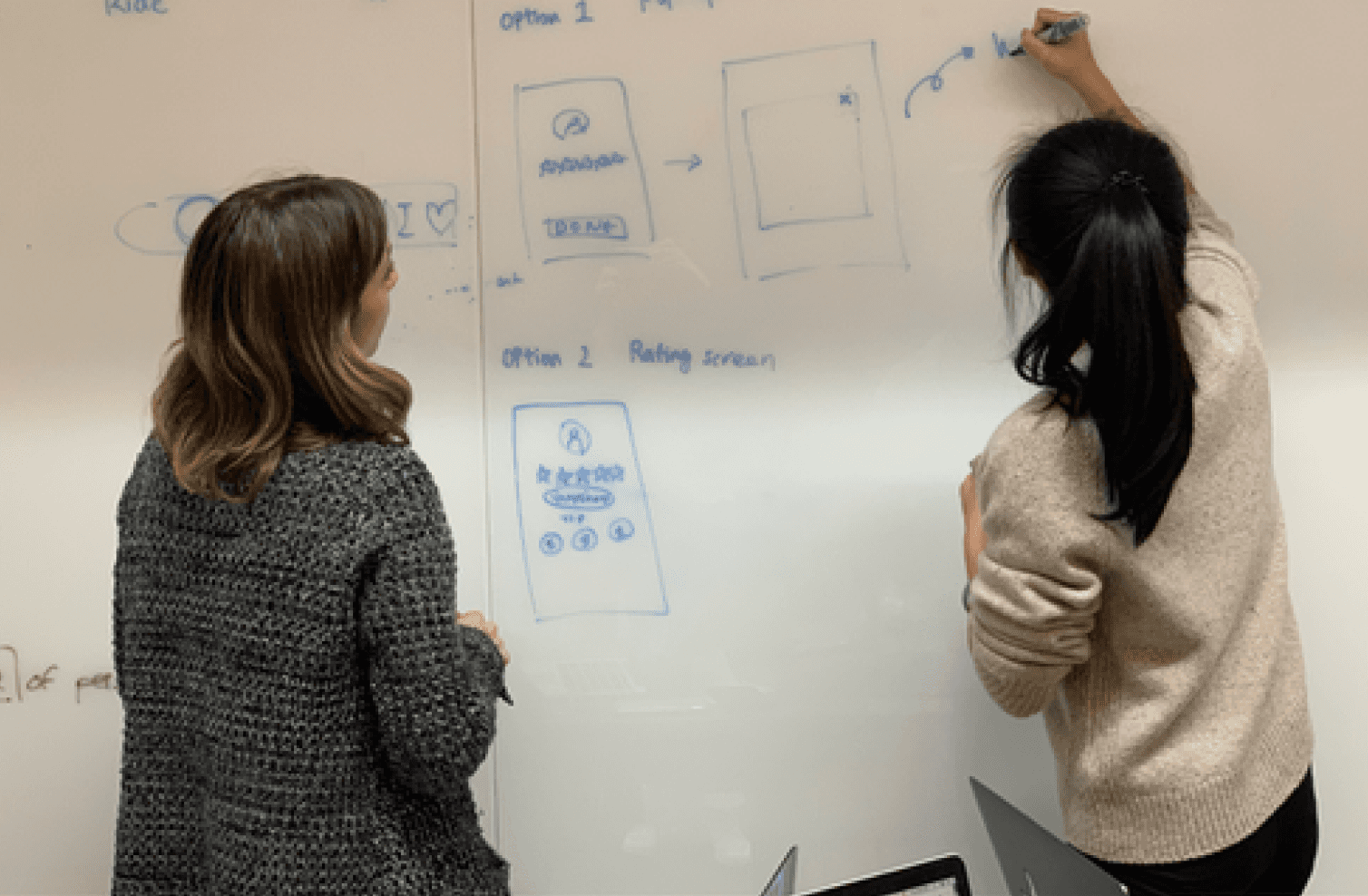
Brainstorming Session

Navigation sketch
Solution
The solution that emerged from the ideation process was a user-centered, scalable digital experience that balanced modern design with the existing brand identity. By leveraging Advanced Search, User Journey Navigation, and User Onboarding, the redesign ensured users could easily access critical healthcare information while maintaining engagement.
To prioritize features effectively, the team used an Impact-Effort Matrix, a decision-making framework that helps teams categorize initiatives based on their potential impact and level of effort required. This matrix was instrumental in determining which features would deliver the greatest value without exceeding scope. The team mapped ideas across four quadrants:


Prototyping
The prototyping process for the Arkansas Children's Hospital website redesign was a collaborative and iterative effort aimed at creating a user-centered digital experience.
Initially, the team developed low-fidelity wireframes to outline the site's structure and navigation, focusing on key areas such as Advanced Search, User Journey Navigation, and User Onboarding. These wireframes facilitated discussions among stakeholders, allowing for early feedback and adjustments.
Subsequently, high-fidelity prototypes were created to incorporate visual design elements and interactive features, providing a realistic representation of the final product. Usability testing sessions were conducted with representative users to identify pain points and gather insights, leading to further refinements. This iterative prototyping approach ensured that the final design was both intuitive and aligned with the needs of patients, families, and healthcare providers.

Physician search and filtering
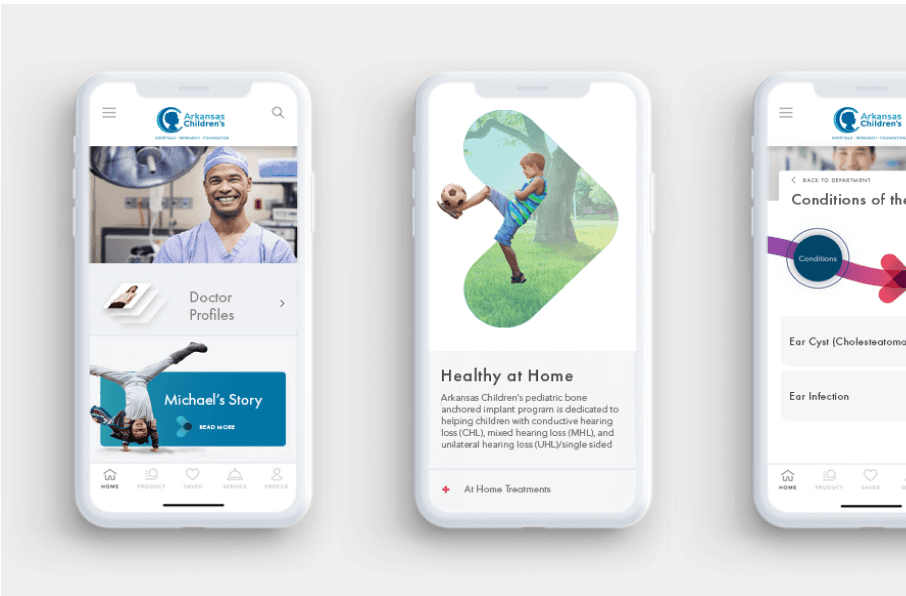
Mobile screens showing key moments in the user journey

Custom navigation element to help users find options through a symptom checker.
Usability Tests
The usability testing process for the Arkansas Children's Hospital website redesign was structured to validate design decisions and refine the user experience through real-world feedback.
Testing sessions were conducted with key user groups, including patients, parents, and healthcare providers, to assess ease of navigation, content discoverability, and the effectiveness of Advanced Search, User Journey Navigation, and User Onboarding.
Participants were given specific tasks, such as finding a specialist, locating patient resources, or scheduling an appointment, while researchers observed interactions and gathered insights. Both qualitative and quantitative data were collected through session recordings, think-aloud protocols, and post-test surveys, helping the team identify usability barriers and areas for improvement.
Findings from each testing round were analyzed and prioritized using an impact-effort matrix, ensuring that critical usability issues were addressed before launch. This iterative testing approach enabled continuous refinements, resulting in a more intuitive, accessible, and patient-centric digital experience.
Findings
Navigation & Wayfinding
Users struggled to locate key resources, with some confusion around medical service categories and patient portals. Streamlining menu structures and improving search functionality helped address these issues.
Content Readability & Clarity
Medical jargon and long-form content overwhelmed users, particularly parents seeking urgent information. Content was simplified, segmented, and formatted for scannability.
User Onboarding & Personalization
First-time users had difficulty understanding available tools, while returning users wanted more personalized content. Enhancements included guided tours and geo-targeted content recommendations.
Search Effectiveness
The Advanced Search feature initially required refinements, as users expected predictive suggestions and clearer filtering options. Adjustments improved relevance and efficiency.
Mobile Accessibility
The mobile experience was inconsistent, with issues in button sizes, text readability, and form usability. Responsive design optimizations ensured a smoother mobile journey.
Conversion & Task Completion
Users encountered friction in completing key actions, such as appointment scheduling and physician searches. Streamlining user flows and reducing unnecessary steps improved task completion rates.
Conclusion
The Arkansas Children’s Hospital website redesign successfully modernized the user experience while maintaining the integrity of the organization’s established brand. By prioritizing Advanced Search, User Journey Navigation, and User Onboarding, we created an intuitive and accessible platform that better serves patients, caregivers, and healthcare professionals.
As a result of our iterative design process—grounded in usability testing and data-driven decision-making—the website saw measurable improvements in performance and user engagement:

Search success rate increased by 45%, with users finding relevant content faster.

Mobile engagement improved by 60%, ensuring a seamless experience across devices.

Time to schedule an appointment decreased by 30%, reducing user frustration.

Bounce rates decreased by 25%, as users navigated more intuitively through content.

